Tank Decommissioning In London
Take a redundant fuel system out of service with a defined permanent outcome. Identify what stays, what leaves and what future contractors need to know.
Enquire About Tank Decommissioning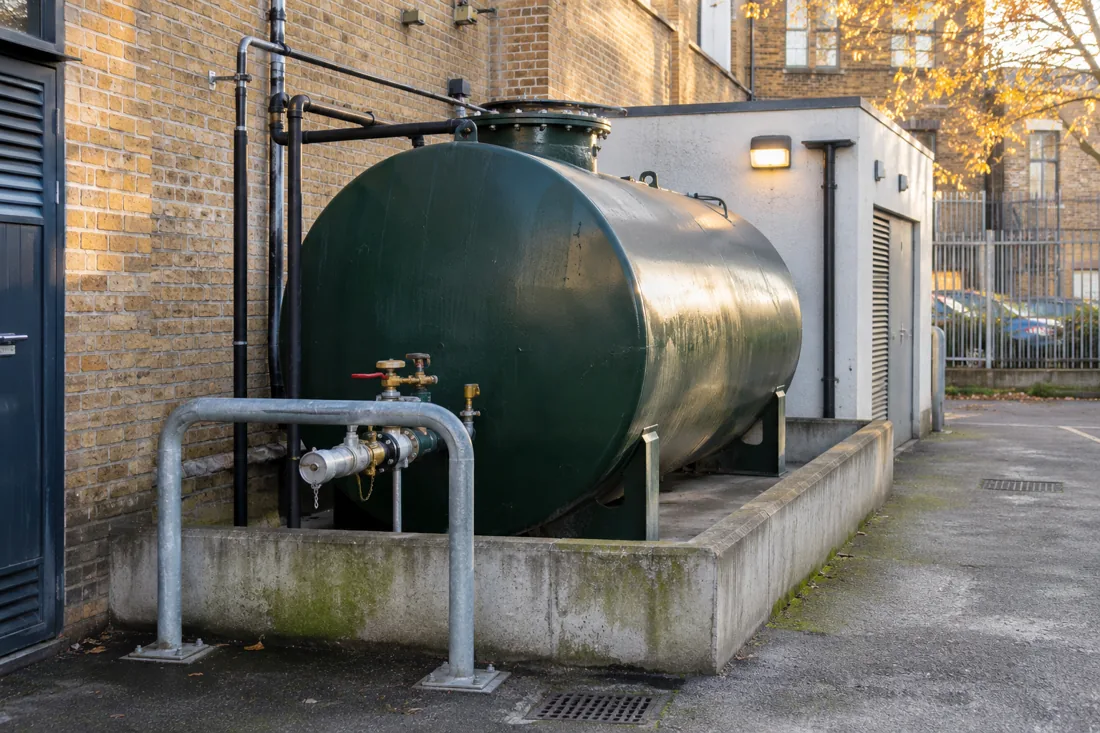
Decommissioning Is A Decision About The Whole System
A tank can stop supplying fuel long before it has been properly decommissioned. Residual liquid, connected pipes and forgotten filling points can remain a problem through a refurbishment or change of occupier. Commercial tank decommissioning should define a safe end state for the vessel and its associated equipment, with responsibilities recorded.
Tell us why storage is ending and what happens next on the property. A boiler conversion, redevelopment and lease exit can each call for a different programme. The tank reference, contents history, current connections and future use of the space are more useful starting information than an assumption that the tank is already empty.
Permanent Closure Or A Temporary Stand-Down?
If the equipment may return to service, say so before agreeing permanent works. Temporary disuse needs its own management arrangements and checks. It should not be confused with permanent filling, which should be treated as an irreversible end to the vessel’s use for fuel storage.
For permanent closure, compare removal with retaining a suitably prepared tank in place. Above-ground equipment may be straightforward to clear once its contents and connections are dealt with. A buried vessel close to structures needs assessment of excavation, stability and the environmental history before an option is selected.
Environment Agency guidance on underground storage tank decommissioning distinguishes temporary and permanent closure and starts from removal for permanent decommissioning. Retention needs a justified, documented approach. Obtain site-specific advice before accepting a proposal that simply seals the openings and leaves the old system unchanged.
Recover Contents Before Closing Anything Off
Identify the remaining product and approximate quantity. Disused tanks can contain water below the fuel and deposits that will not appear in a gauge reading. The proposal should set out what can be recovered for an agreed compatible use and what must leave through a suitable waste route.
Cleaning and safety preparation need to match the closure method. Dangerous-substance risks need assessment under DSEAR, and entry into the tank brings additional confined-space considerations. These are reasons for a competent method statement, not a checklist for the building occupier to carry out.
A strong smell, unexplained loss of fuel or staining outside the containment changes the scope. Tell us immediately when enquiring. Decommissioning the vessel does not establish that surrounding soil or groundwater is clean, and a suspected historical release may need a separate investigation.
Map The Connections And The Shutdown
A commercial fuel system may include remote fill points, vents, return lines and supplies to more than one item of plant. Drawings and labels help, but their accuracy needs checking against the installation. Ask for the retained and redundant elements to be identified in the scope.
The site’s authorised trades should agree isolation responsibilities and the effect on connected equipment. Where a replacement generator or heating supply is needed, its changeover must fit the programme. Occupied premises also need a plan for tenant communication, service access, work boundaries and reinstatement.
Where pipework crosses floors or shared areas, agree what is removed and how penetrations are left. Specialist making good, such as restoring a fire-resisting construction, may need another trade. A completion record should not imply that those separate building works have been delivered unless they are included.
Information To Send Before A Survey
Provide the site postcode, tank capacity, construction, location and previous contents. Include an estimated remaining volume, photographs of the tank and all visible connections, and a description of the planned future use. For buried equipment, share site plans, available environmental reports and any known excavation restrictions.
Photograph the approach for vehicles and the route for hoses or removed material. Note basement stairs, restricted parking, shared courtyards and working-hour limits. If a transaction or building project sets the deadline, explain the date and which documents the property team expects at handover.
Compare Proposals Against The Same End State
The main cost drivers are the remaining liquids, preparation method, tank location, excavation or lifting, access and the chosen permanent outcome. Cleaning and filling a retained vessel involve different resources from dismantling a tank inside a building. Neither option automatically includes remediation of ground affected by an old leak.
Ask the quotation to separate removal or filling, liquid and residue handling, associated pipework and surface reinstatement. Identify what happens if the tank condition differs from the drawings. An agreed stop and review point is helpful where hidden connections, contamination or structural uncertainty could affect the work.
Leave A Record That Survives The Project
The handover should identify the tank, its location, recorded capacity and former contents, the closure date and the method used. Where a vessel remains, retain a drawing that shows it accurately and describes the fill material. Never describe a retained, filled tank as removed in property or asset records.
Waste transfer notes or hazardous waste consignment notes depend on the materials and their classification. Ask which completion, filling and gas-testing records apply to the selected work. A decommissioning record is evidence of a defined scope, not a blanket statement that an entire site is free of contamination or suitable for any future development.
Tank Decommissioning Questions
Is Decommissioning The Same As Removal?
Tank decommissioning describes taking storage out of service and making the system safe for its agreed end state. Removal is one possible outcome. Retaining a tank in place requires a separate assessment and appropriate permanent treatment, with records showing its location and condition for future owners, occupiers and contractors.
Does Decommissioning Resolve Historic Leaks?
Tank decommissioning does not by itself resolve a historic fuel leak. The vessel and its contents are one part of the problem, while affected soil, drainage or groundwater may need investigation and separate work. Provide any leakage history and environmental reports early so that the proposed scope does not overlook those issues.
Further Guidance
- Environment Agency: Underground Tank Decommissioning
- HSE: Dangerous Substances And Explosive Atmospheres
- GOV.UK: Hazardous Waste
General guidance supports planning. The site assessment determines the method and applicable requirements.
Bring The Site Details Together
Send the postcode, equipment details and the outcome you need. We will use your enquiry to help identify a suitable service provider, with your agreement.
Start Your Enquiry